Gold and Silver Prices Drop
Gold and Silver Prices Fall payroll data impact on gold, interest rate expectations, precious metals market outlook, why gold prices drop, silver price analysis
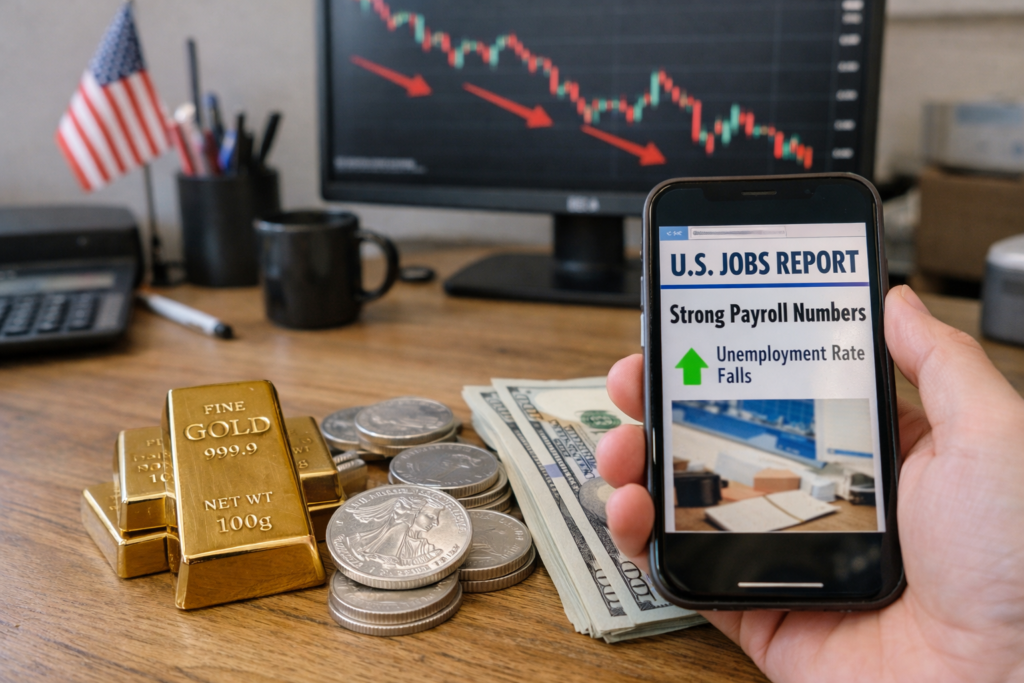
Table of Contents
Introduction
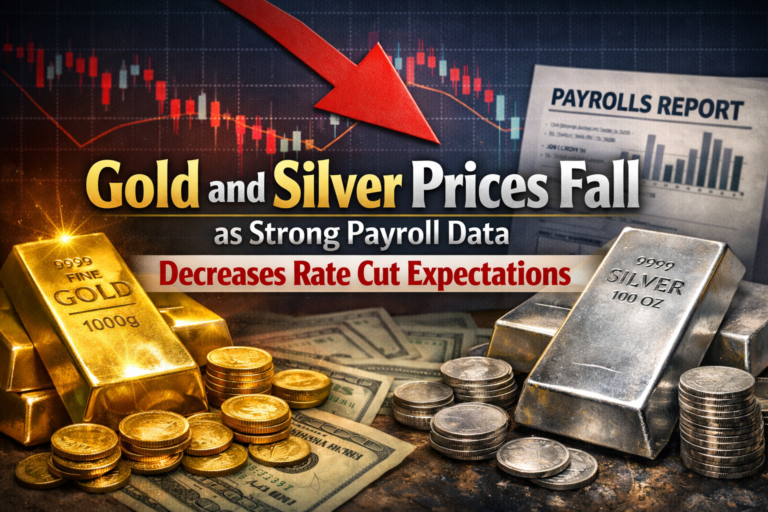
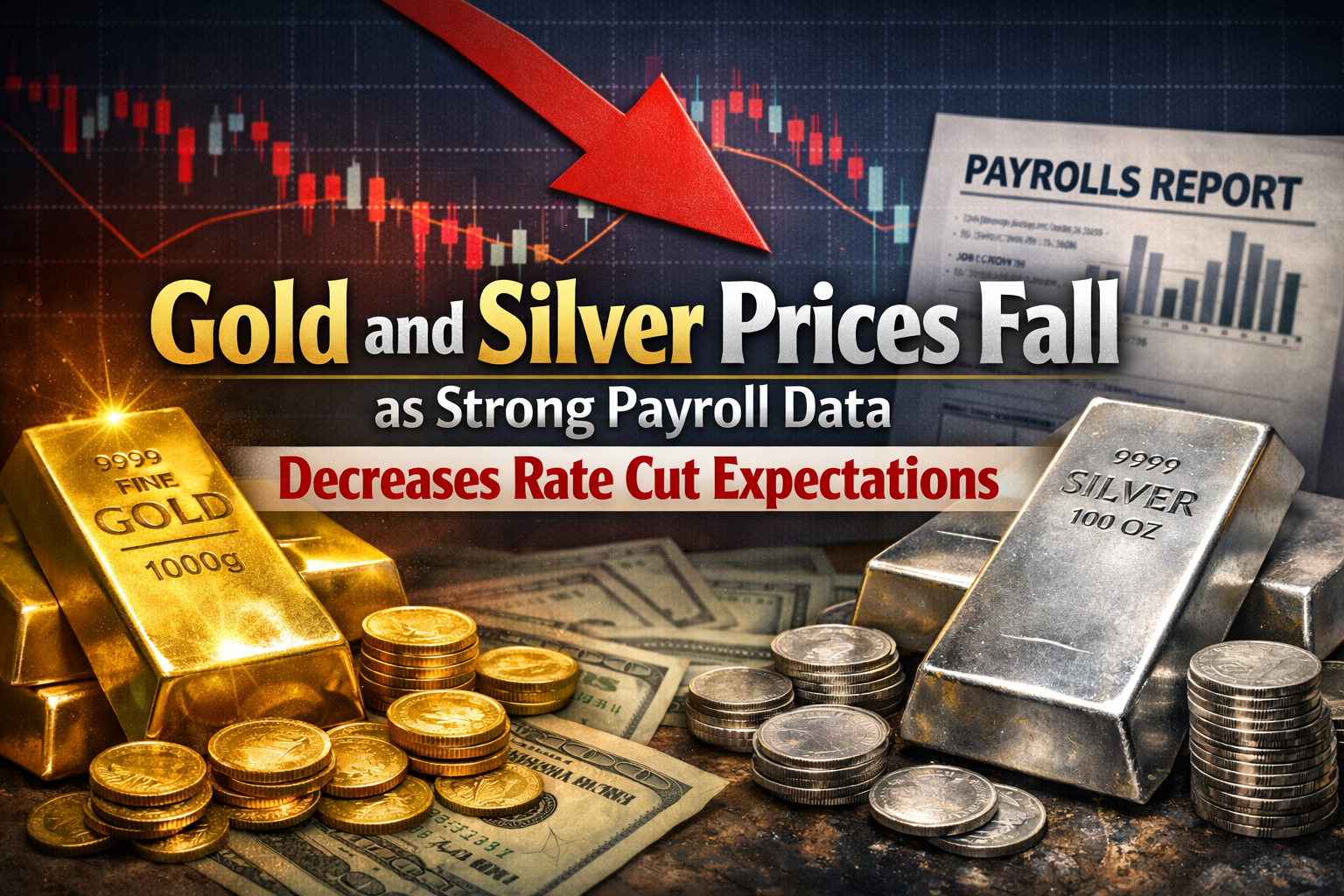
Gold and silver prices fell recently after stronger-than-expected payroll data signaled that interest rate cuts may not happen as soon as investors hoped. Precious metals markets react quickly to macroeconomic indicators, and employment data is one of the most influential. When job growth remains strong, central banks—especially the U.S. Federal Reserve—tend to keep interest rates higher for longer, which often pressures gold and silver prices downward.
This development highlights how closely linked the labor market, monetary policy expectations, and precious metals are. Understanding this relationship can help investors make smarter decisions about timing, diversification, and risk management.
Why Payroll Data Matters for Gold and Silver Prices
Employment reports, especially U.S. nonfarm payrolls, are considered leading indicators of economic strength. When payroll numbers come in strong, it signals:
- Economic growth remains resilient
- Consumer spending may stay strong
- Inflation pressures could persist
Because central banks aim to control inflation, strong job data reduces the likelihood of near-term interest rate cuts. Higher interest rates increase the opportunity cost of holding non-yielding assets like gold and silver, making them less attractive compared to bonds or savings instruments that generate returns.
How Interest Rate Expectations Influence Precious Metals
Gold and silver do not produce interest or dividends. Their value mainly depends on:
- Inflation expectations
- Currency strength (especially the U.S. dollar)
- Interest rates
- Geopolitical risk
When interest rates stay high:
- Bond yields rise.
- The U.S. dollar strengthens.
- Investors shift capital away from metals.
As a result, precious metals often decline when rate-cut expectations fade. This is exactly what happened after the latest payroll report.
Market Reaction After Strong Jobs Data
Following the release of strong employment numbers:
- Gold prices dipped as traders adjusted expectations for monetary policy.
- Silver prices also fell, often with greater volatility than gold because silver has both industrial and monetary demand.
- The dollar index strengthened, further pressuring metals.
Short-term traders quickly repositioned portfolios, leading to selling pressure in futures markets and exchange-traded funds backed by physical metals.
Why Strong Employment Can Be Bearish for Gold
At first glance, strong economic data should be positive for markets overall—and it is for equities. But gold behaves differently because it is primarily seen as a safe-haven asset.
Investors typically buy gold when:
- Economic uncertainty rises
- Inflation spikes
- Markets become volatile
- Interest rates fall
Strong payroll data suggests the opposite environment: stability, growth, and tighter monetary policy. That combination usually pushes investors toward risk assets instead of defensive holdings like gold.
Silver’s Unique Position in the Market
Silver often moves in the same direction as gold but tends to experience larger percentage swings. That’s because silver demand comes from two major sources:
- Investment demand (like gold)
- Industrial demand (electronics, solar panels, EV components)
When economic data is strong, industrial demand expectations may improve, which can support silver. However, if rising interest rates dominate market sentiment, silver can still fall alongside gold—as seen after the payroll report.
Investor Sentiment and Market Psychology
Market movements are not driven only by numbers—they are driven by expectations. Before the payroll release, many traders believed the central bank might cut rates soon. When the strong data contradicted that assumption, markets had to rapidly adjust.
This shift triggered:
- Profit-taking in precious metals
- Short-term speculative selling
- Reduced safe-haven demand
Psychology plays a major role. Even a single report can change sentiment dramatically if it alters the interest-rate outlook.
Historical Pattern: Jobs Data vs Gold Prices
Historically, gold often declines immediately after strong employment reports, especially when inflation is not rising sharply at the same time. Analysts frequently observe a pattern:
- Strong payrolls → higher rate expectations → gold dips
- Weak payrolls → rate-cut expectations → gold rises
This pattern isn’t guaranteed, but it occurs often enough that traders closely monitor employment releases.
Should Investors Be Concerned?
A short-term drop in gold and silver prices does not necessarily signal a long-term bearish trend. Precious metals typically move in cycles influenced by:
- Global economic conditions
- Central bank policies
- Inflation trends
- Currency fluctuations
Long-term investors often see price dips as buying opportunities rather than warning signs. Many portfolio managers still recommend holding a percentage of assets in precious metals for diversification and risk protection.
Outlook for Gold and Silver
The future direction of gold and silver will largely depend on upcoming economic data and central bank signals. Key factors to watch include:
- Inflation reports
- Federal Reserve statements
- GDP growth data
- Global geopolitical developments
If future reports show slowing growth or cooling inflation, expectations for rate cuts could return, potentially supporting gold and silver prices again.
Strategic Takeaways for Investors
If you invest in precious metals—or are considering it—here are practical insights:
- Monitor macroeconomic indicators: Employment, inflation, and interest rates are critical drivers.
- Think long term: Precious metals perform best as strategic holdings, not short-term trades.
- Diversify holdings: Combining gold, silver, equities, and bonds balances risk.
- Avoid emotional trading: Market reactions to data releases can be temporary.
About The Author